AFL Fantasy
Overview
AFL Fantasy attracts highly engaged fans, but managing a team week-to-week is cognitively demanding, especially for casual players who struggle to make confident decisions around trades, captain selection, and player performance.
Through early exploration, I identified that users weren’t just looking for data; they needed clarity and guidance at key decision moments.
Problem:
Casual and mid-core AFL Fantasy players lack the confidence and clarity to make timely, informed decisions, leading to frustration, second-guessing, and drop-off in engagement throughout the season.
Design Goal:
Simplify decision-making during critical weekly interactions (team selection, trades, captain choice) while maintaining enough depth for more experienced users.
category
Free to Play | Design System | Product Design | Micro-animation | Branding | Product Management
tools
Figma, Photoshop, After Effects, Illustrator, Figjam, Jira
Research
To better understand user behaviour, I conducted a mix of:
A structured interview with our most engaged AFL Fantasy users, conducted in two invitation waves over a two-week period, resulting in over ~5,500 responses from 7,000 invitations.
A lightweight survey (n=42) distributed across fantasy communities on reddit, podcasts, and social media.
Competitive analysis of ESPN Fantasy and SuperCoach.
Key Insights:
Decision paralysis is a core pain point
Users felt overwhelmed by too many stats and conflicting opinions.
→ “I spend more time second-guessing than actually making changes.”
Users rely on external tools and communities
Many players cross-reference Reddit, Twitter, or spreadsheets before making moves.
→ Indicates a lack of trust or clarity within the product itself.
Weekly engagement drops after poor performance
Users who had a “bad round” were less likely to return the following week.
→ Emotional friction impacts retention.
Opportunity:
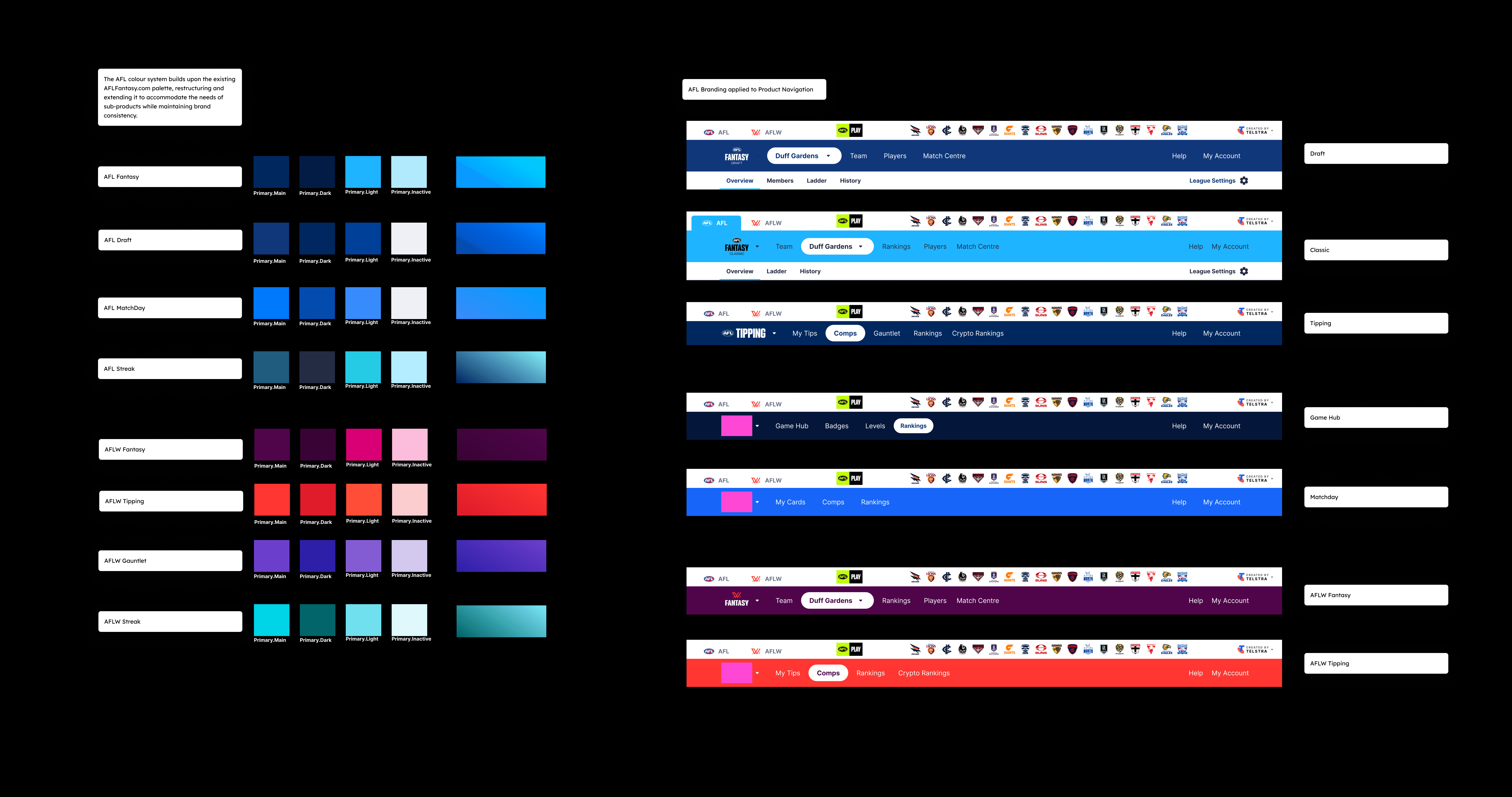
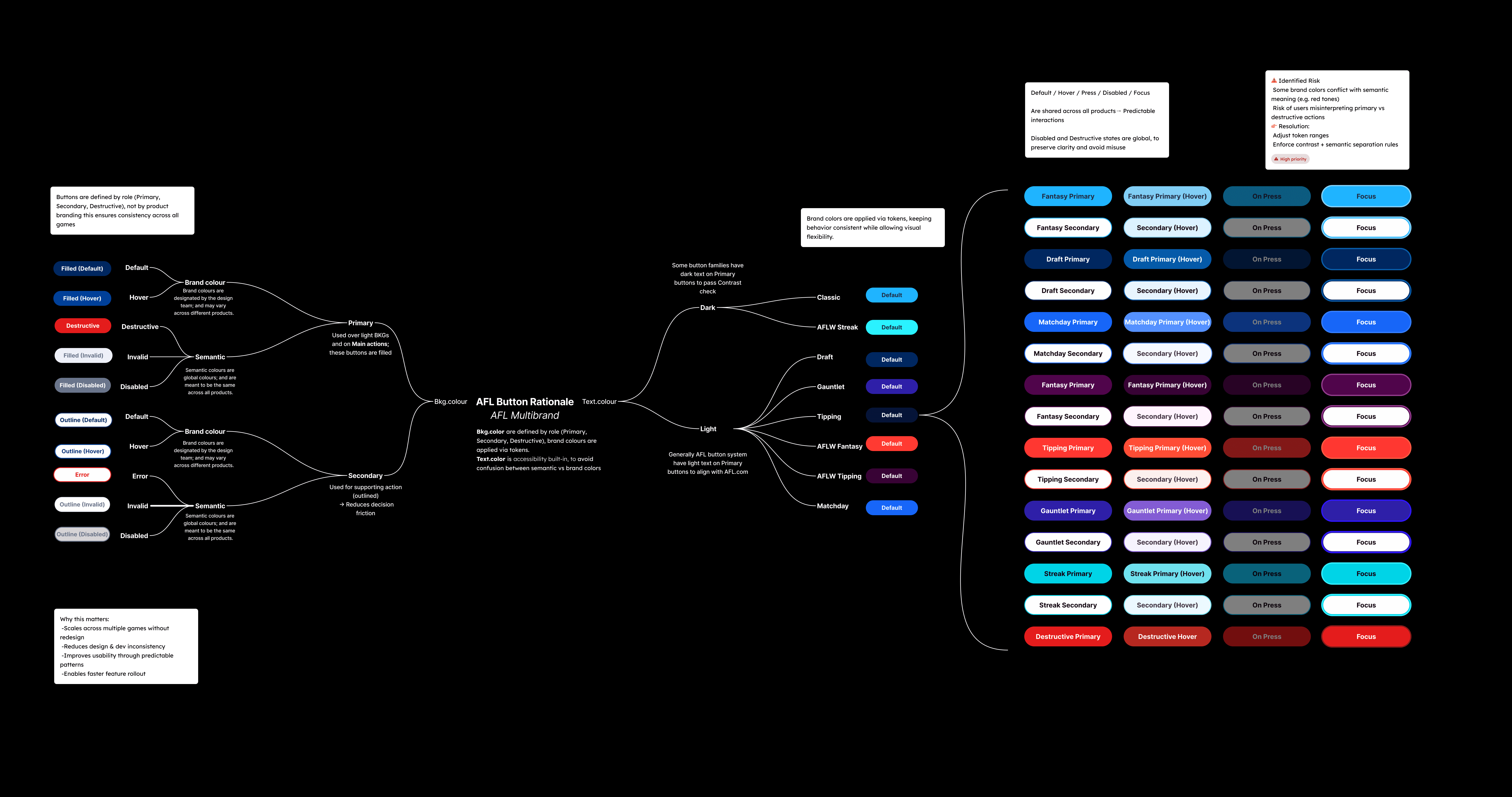
Produce a design system that reduces cognitive load, surfaces relevant insights at the right time, and reinforces user confidence in their decisions.
Design Process
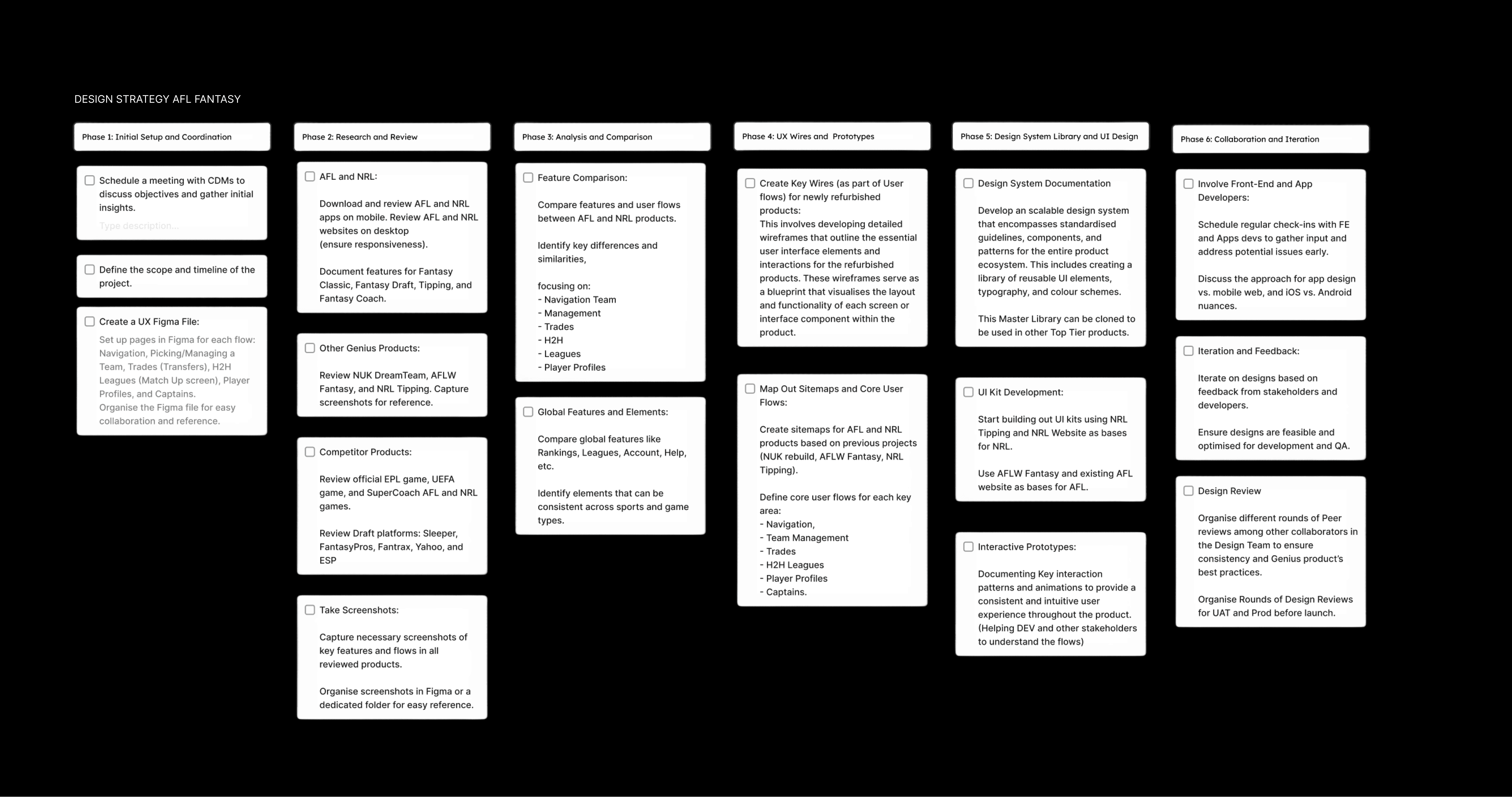
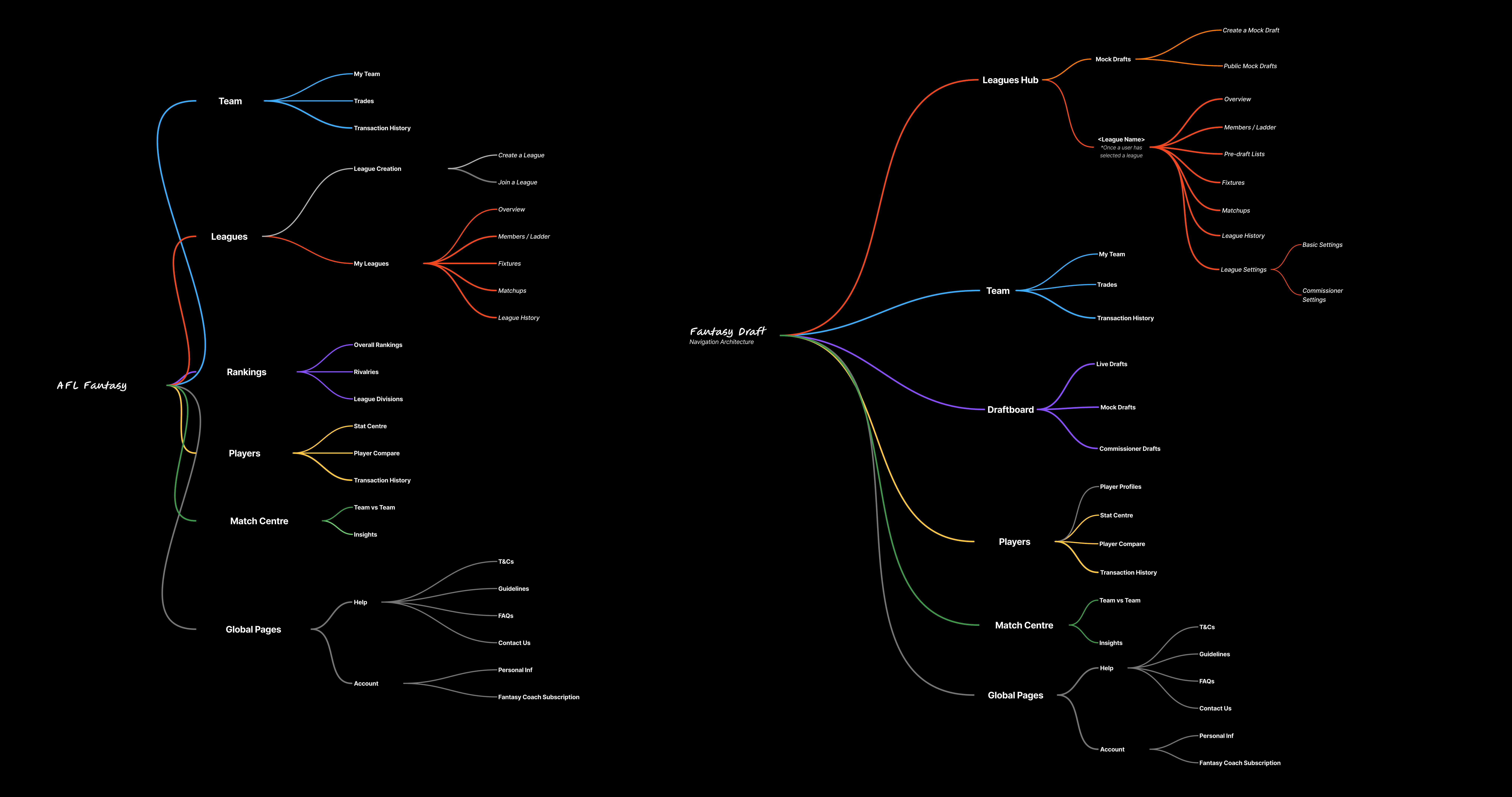
I structured the experience around the core weekly loop:
Review → Decide → Act → Reflect
Early wireframes explored multiple directions for presenting player data:
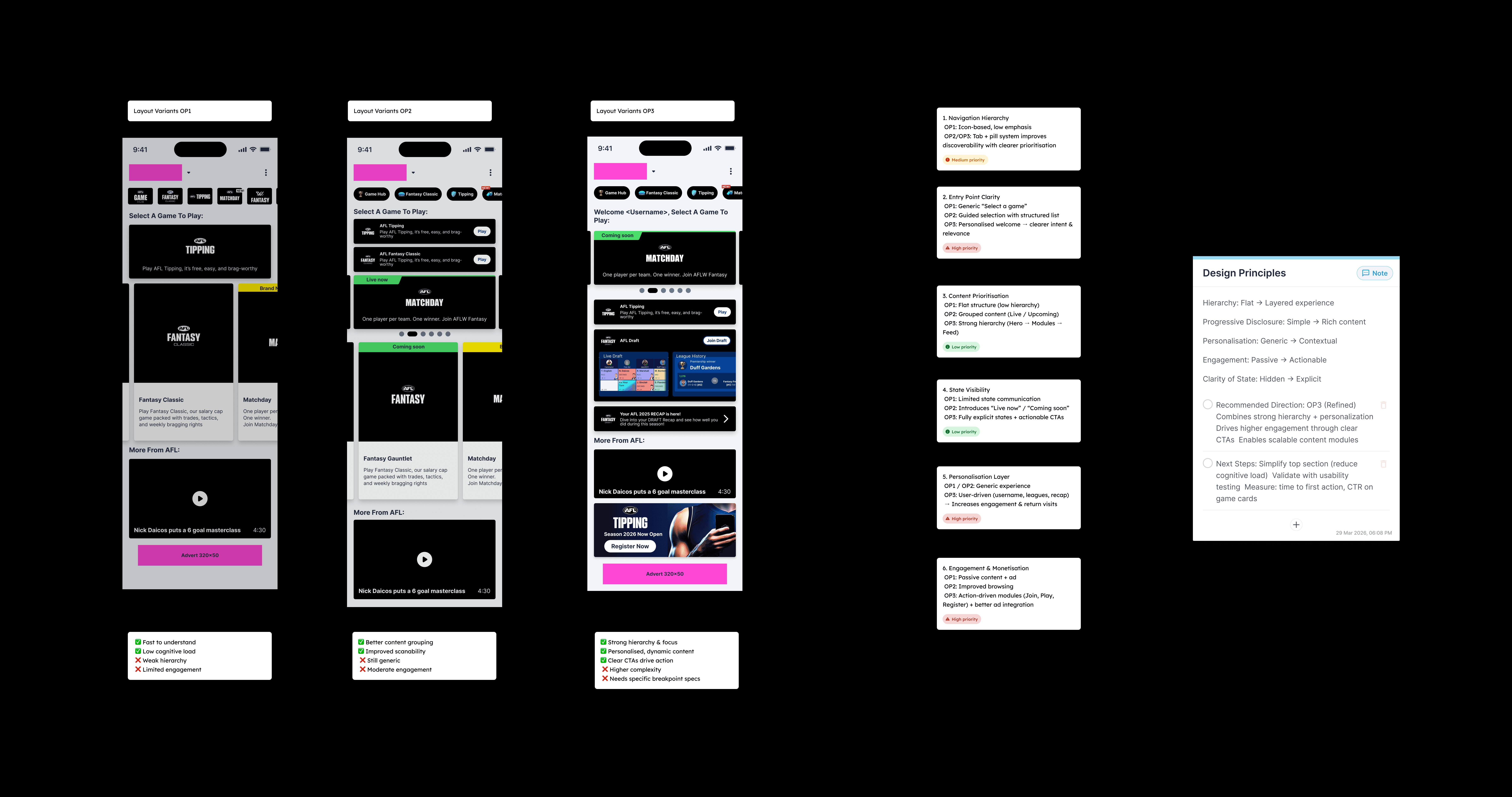
Option A: Data-heavy dashboard (appealing to expert users)
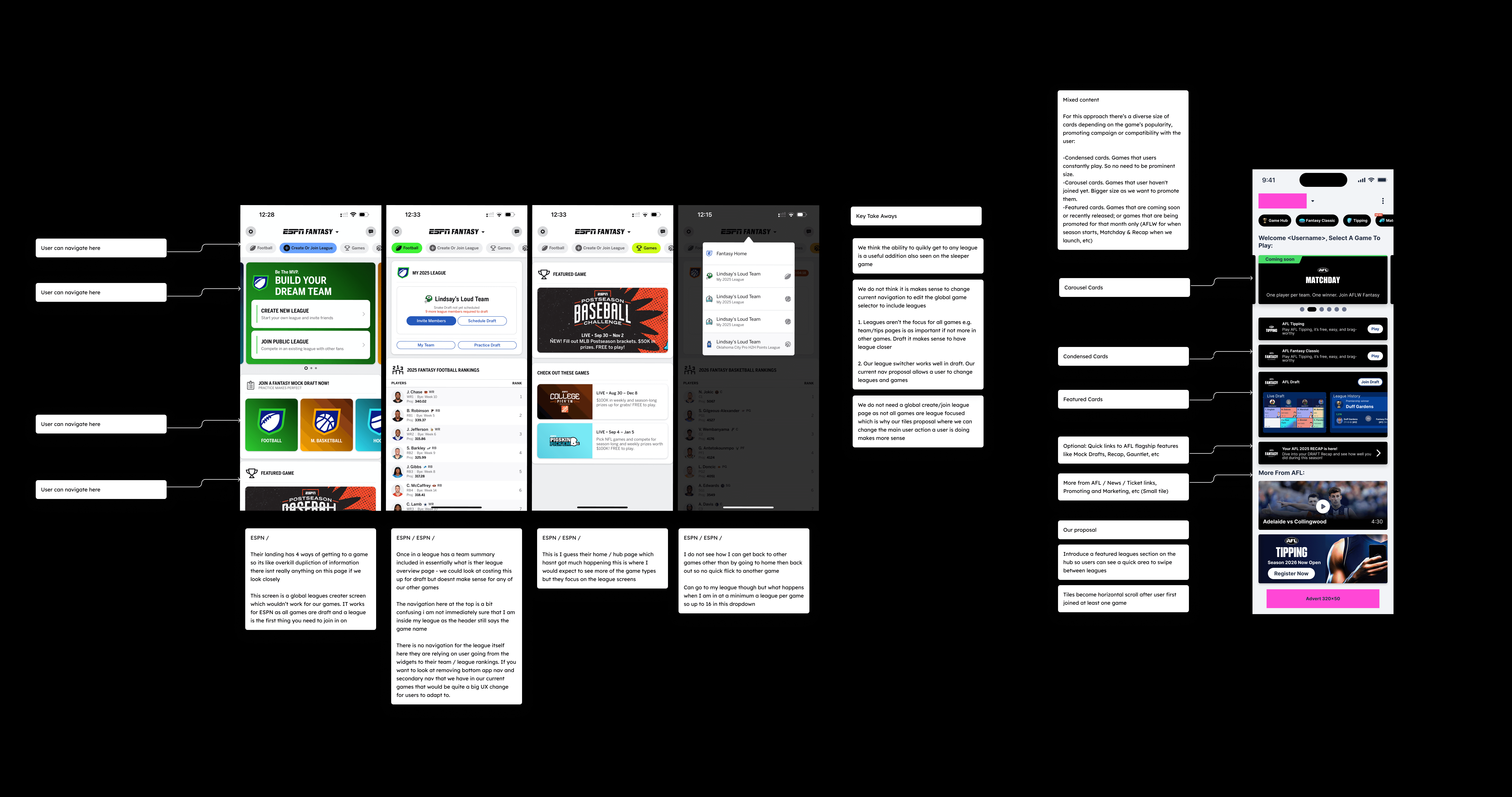
Option B: Simplified, recommendation-driven UI
Trade-off:
Data-heavy views increase control but overwhelm casual users
Simplified views improve clarity but risk reducing trust for advanced players
Decision:
I chose a progressive disclosure approach:
Surface key insights upfront (e.g., player profile, projected score)
Allow users to drill into detailed stats on demand
This balanced usability for casual users while preserving depth for experienced players.
Solution
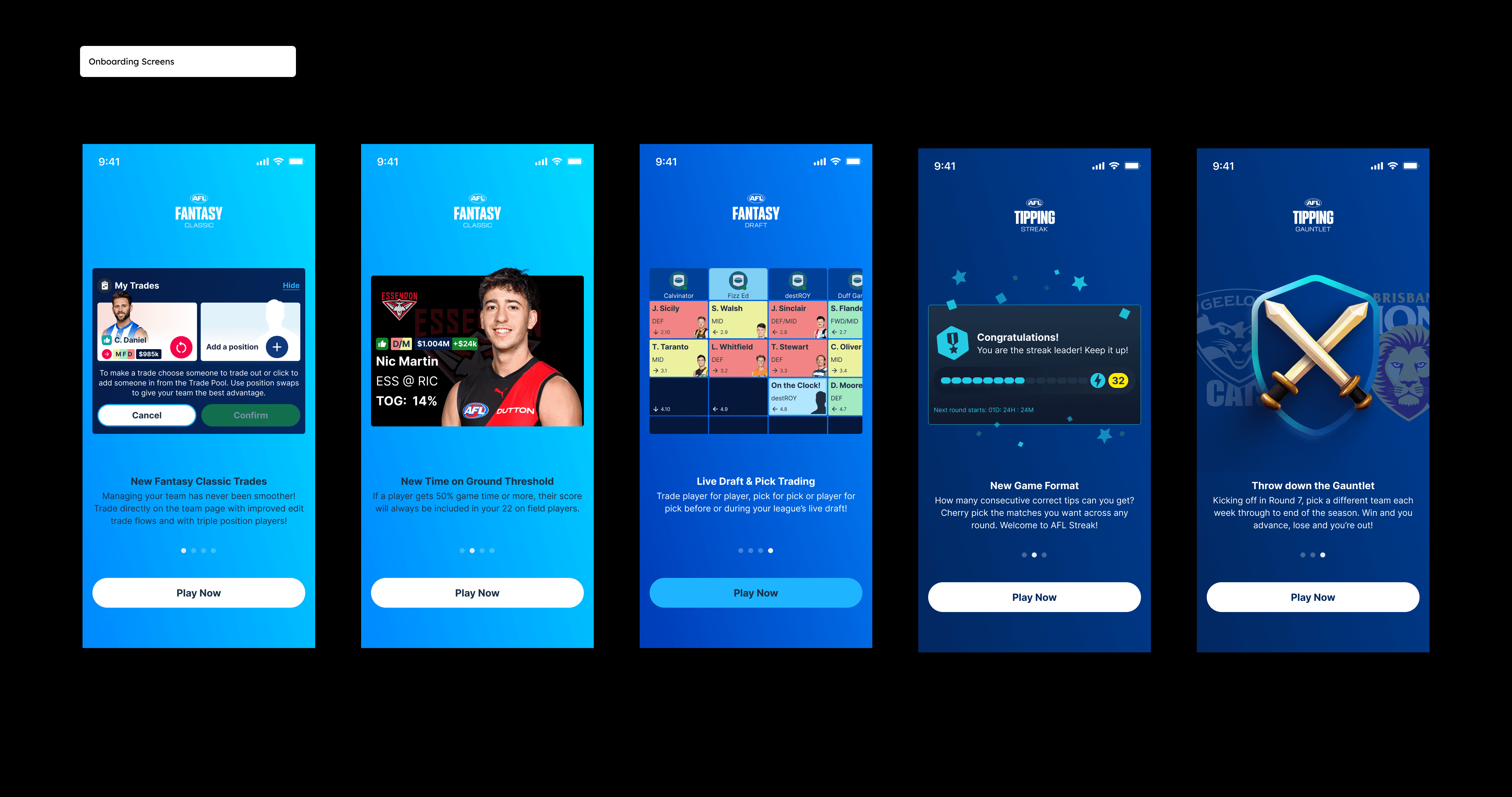
The final solution shifts the experience from a data-heavy interface to a decision-support system.
1. Smart Player Cards
Surface the most relevant metrics (form, average, trend) to reduce scanning and comparison time.
→ Helps users quickly evaluate players without feeling overwhelmed.
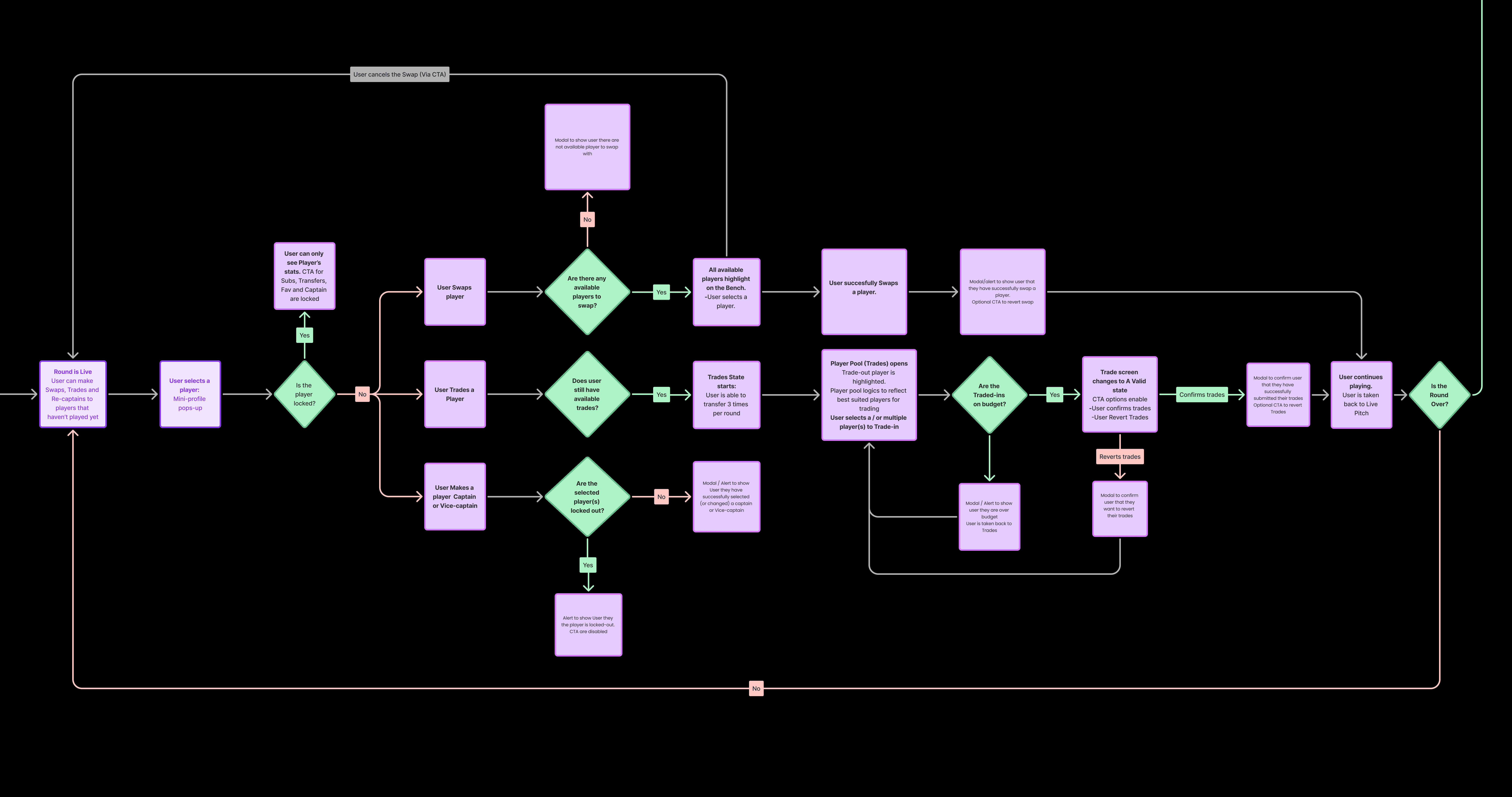
2. Guided Trade Flow
Introduces side-by-side comparisons and clear performance indicators.
→ Reduces decision paralysis and increases confidence.
3. Contextual Insights
Provides relevant information at key moments (e.g., before confirming trades).
→ Minimises the need for external research.
4. Simplified Weekly Experience
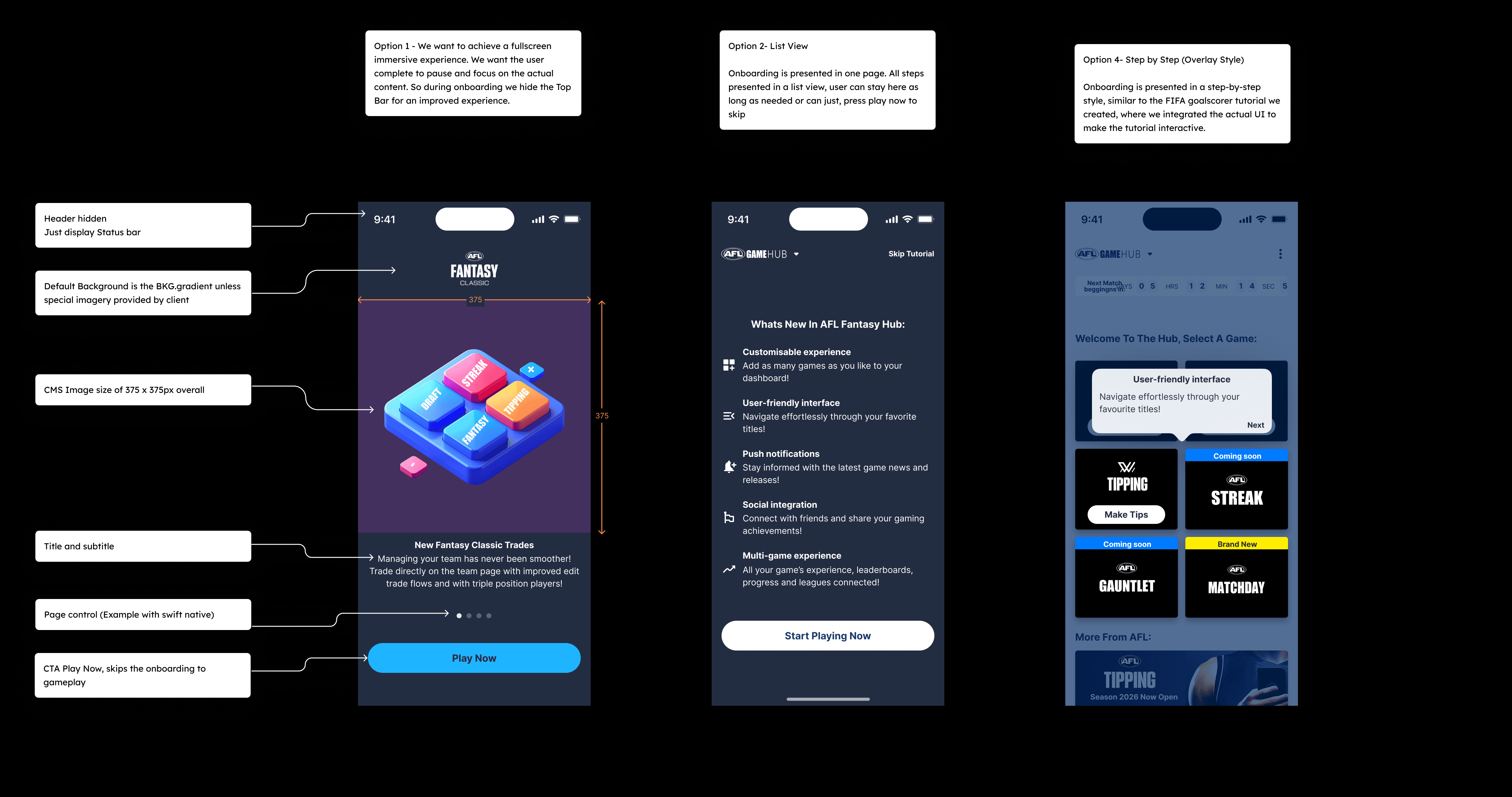
Structures the journey into clear steps: review, decide, and confirm.
→ Reduces friction and improves usability.
Outcome
The experience becomes more intuitive, helping users make faster, more confident decisions while maintaining depth for advanced players.
Launch & Delivery
Pre-Launch (19.12.25): Marketing campaign across AFL channels and social platforms, with early access for select AFL members
Launch 1.0 (12.03.26): Web and responsive web release, with ongoing testing and QA
Launch 2.0 (19.02.26): Mobile app launch on Apple App Store and Google Play
Post-Launch (26.03.26): Continuous feature rollout driven by user feedback and AFL partnerships
01
02
03
04
05
06
Conclusions and Impact
To evaluate success, I defined metrics aligned with both user behaviour and product goals:
Engagement
+18–25% increase in weekly active users
+12% increase in session duration during peak usage
Behavior
+30% increase in completed trades per session
-20% reduction in time taken to make key decisions
Retention
+15% improvement in week-over-week retention, especially after low-scoring rounds
User Sentiment
Users reported feeling “more confident” and “less overwhelmed” during testing
Impact
By reducing cognitive load and supporting decision-making, the product evolves from a tool that presents data into one that actively guides users, improving both engagement and long-term retention.
01
02
03